Categories > Attractions
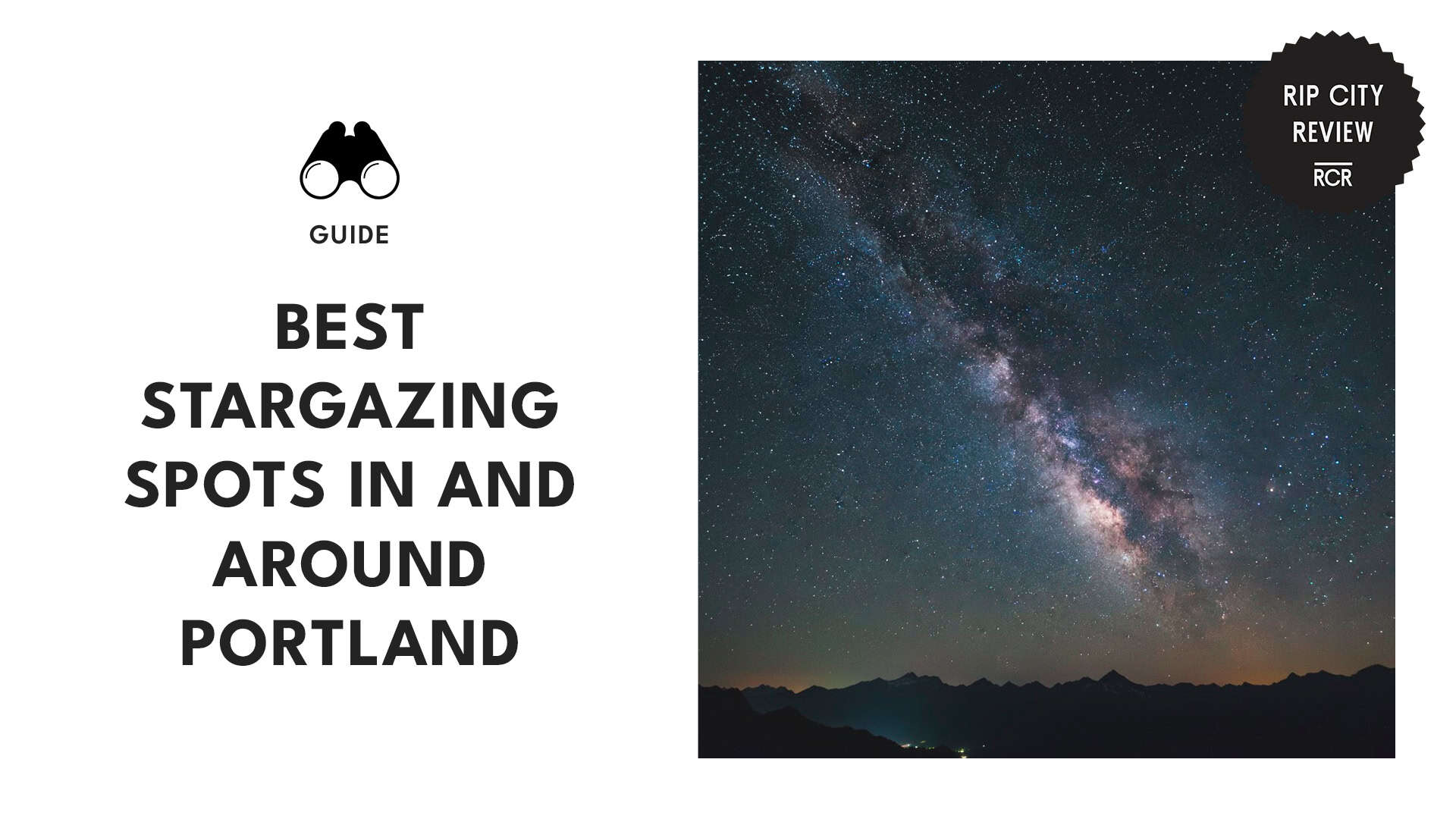
The 7 Best Stargazing Spots in Portland for the Best Views

When the night sky takes center stage, Portland (especially its nearby areas) transforms into a gateway to the stars. They offer opportunities to trade the glow of street lights for the natural beauty of constellations.
Forests, mountains, and open spaces just an hour away from the city provide viewing experiences from various settings. With this, you can stargaze while doing other things you love, such as hiking and camping.
Whether you’re an astronomer or just love lying under the stars, Portland’s nearby landscapes bring some of the most breathtaking stargazing experiences in the Pacific Northwest.
In this blog, I’ll share the best stargazing locations in and around Portland that promise striking views of the cosmos.
1. Rooster Rock State Park
Media credit: couchstphotos
Website: https://stateparks.oregon.gov/index.cfm?do=park.profile&parkId=126
Address: Corbett
Contact Details: +1 800 551 6949, +1 800 452 5687, and +1 503 695 2261
Operating Hours:
- Monday to Sunday – 6 AM to 10 PM
Estimated Travel Time from Portland: 25 minutes
Pricing: $
Rooster Rock State Park is a popular stargazing spot known for its wide, open spaces that are perfect for lying while staring at the star-lit sky.
What’s great about this location is that it has low light pollution, so there’ll be less artificial light that’ll wash out fainter stars.
Another impressive thing is the number of major constellations you’ll see here. To name a few, I’ve witnessed Orion, Cassiopeia, and the Big Dipper here. Not only that, I also had a view of bright stars like Sirius and Betelgeuse.
If you’re lucky, you’ll also see planets Jupiter and Mars through a telescope, as they’re visible in this spot in some seasons.
| Pro Tip: Visit during the late summer and early fall for a higher chance of seeing meteor showers. You can purchase an annual pass to avoid paying a parking fee every time you visit if you wish to frequent here. |
2. L.L. Stub Stewart State Park
Media credit: pnwshawn
Website: https://stateparks.oregon.gov/index.cfm?do=park.profile&parkId=75
Address: L.L. Stub Stewart State Park, Buxton
Contact Details: +1 800 551 6949, +1 800 452 5687, and +1 503 324 0606
Operating Hours: Open 24/7
Estimated Travel Time from Portland: 35 minutes
Pricing: $
You’ll surely love the dark, clear sky at Stub Stewart State Park. I highly recommend staying at the Hilltop day-use Area, as it’s the designated spot for a dark sky. It’s the park’s place where many families gather around and watch the night sky.
One of the things I love about this park is the perfect view of the Milky Way it offers. Imagine me lying on the grass, fascinated by this celestial body that I had only seen in a book before. The experience was truly unforgettable for me.
Aside from the Milky Way, the park also provides sightings of the Cygnus, Lyra, and Aquila constellations. Not only that, there are also seasonal sightings of the Pleiades star cluster and shooting stars during meteor showers.
| Pro Tip: Consider visiting during winter, as the spot provides the clearest skies during this season. Overnight camping is allowed in the park at a nominal fee. |
3. Larch Mountain
Media credit: shutterbug_shah
Operating Hours: Open 24/7
Estimated Travel Time from Portland 50 minutes
Pricing: Free
With an elevation of over 4,000 feet, Larch Mountain offers stunning panoramic views of the night sky and reduced light pollution. Choosing to stargaze here is like hitting two birds with one stone, as you’ll also experience mountain climbing.
This extinct volcano offers views of the Milky Way and constellations Scorpius and Sagittarius. The constellations are visible toward its south side. If you’re lucky like me, you’ll have sightings of all of them at the same time during your visit.
Apart from those, folks with advanced telescopes will have the opportunity to see bright planets Venus and Saturn.
| Pro Tip: Plan accordingly, as the road to the mountain’s popular stargazing area is only open during the summer months, from July to October. Consider packing water, snacks, and other supplies, as it’s located in a rural area with limited services. |
4. Henry Hagg Lake
Media credit: sud_har_shan
Pricing: Free
Estimated Travel Time from Portland: 40 minutes
I recommend Henry Hagg Lake for adventurers who prefer peaceful surroundings while stargazing. The lake’s still water and the spot’s calming air due to the environment provide a serene atmosphere worth traveling for.
This is the ideal stargazing spot for those who love to snap pictures. The lake’s calm water provides clear reflections of the sky, allowing adventurers to capture creative shots. I even felt like I was a professional photographer because of its natural beauty.
When it comes to views, you’ll see popular constellations here, such as Ursa Major and Leo. There are also occasional glimpses of the Andromeda galaxy on super clear nights. The view will totally depend on how lucky you are during your visit.
| Pro Tip: Arrive as early as possible to secure a good, dark spot away from any lakefront lighting. Mosquito repellent is a must-have during warmer months. |
5. Mount Hood National Forest
Media credit: lookoutfox
Website: https://www.fs.usda.gov/r06/mthood
Address: 16400 Champion Way, Sandy
Contact Details: +1 503 668 1700
Operating Hours: Open 24/7
Estimated Travel Time from Portland: 50 minutes
Pricing: $
Mount Hood National Forest’s darker skies reveal many stars, especially during summer. There are many great viewpoints here for stargazing, such as Trillium Lake, Timberline Lodge, and Milo McIver State Park.
What’s even better is that there are campgrounds that only charge a small fee for an overnight stay. It would be great if you could bring your whole family or circle of friends with you during your visit. Imagine having bonfire talks with them under the stars.
Speaking of stars, I enjoyed the views of the constellations Perseus and Orion here throughout the night. Aside from that, you’ll also see Jupiter, Saturn, and some meteor showers like the Perseids if the weather permits.
| Pro Tip: If your budget permits, book Fivemile Butte Lookout for an overnight stay with better views of not just the night sky but also the forest’s surroundings. |
6. Columbia River Gorge National Scenic Area
Media credit: timothycameronphotography
Website: https://www.fs.usda.gov/r06/columbiarivergorge
Address: 902 Wasco Street, Suite 200, Hood River
Contact Details: +1 541 308 1700
Operating Hours: Open 24/7
Estimated Travel Time from Portland: 20 minutes
Pricing: $
Columbia River Gorge National Scenic Area is a hiking area with a relaxing atmosphere. It’s an ideal spot for a silent night stargazing, especially when there are fewer tourists during your visit.
What I like here is the varying views it gives depending on where you’re standing. The ground’s varying elevation provides diverse perspectives on planetary movements and star clusters. It’s really an experience sitting near the river while looking at the sky.
I had good views of the northern constellations Cassiopeia and Perseus from the scenic overlook viewpoint. It’s one of the popular spots where many astronomers and aspiring photographers use their cameras and telescopes to capture the constellations.
| Pro Tip: Visit during early fall or late spring for a clearer dark sky. You may also visit the nearby Goldendale Observatory, which houses one of Oregon’s largest telescopes. |
7. Star Party at the Oregon Museum of Science and Industry
Media credit: eclipticbrewing
Website: https://omsi.edu/events/omsi-star-party/
Address: 1945 SE Water Ave
Contact Details: +1 503 797 4000 and [email protected]
Pricing: $
For a community stargazing experience, I recommend attending the Oregon Museum of Science and Industry’s star party events. What’s great about this party is that you’ll have the opportunity to talk to actual astronomy experts.
The party usually takes place at Rooster Rock State Park or L.L. Stub Stewart State Park, but there are instances when it’s organized at a public urban area.
Aside from expert talks, the party includes guided stargazing and telescopes for public use. Overall, it’s a great event if you want to experience stargazing together with many people. Who knows, maybe you’ll have a new friend after the party.
| Pro Tip: Follow the event’s strict light restrictions to maintain the dark sky for everyone’s benefit. If the party takes place at a state park, bring a red flashlight so you don’t disrupt your and others’ night vision. |